The next chapter of sustainability at ABM



Key Takeaways
- Governance gap: 64% of companies have a climate plan,yet most show no progress or are backsliding on prior transition commitments.
- Reporting requirements will keep changingbefore they stabilize; vendors betting on today's rules rather than durabledata systems are building for the wrong future
- Verification matters: ABM's sustainability credentials arethird-party audited and mostly re-earned annually, not self-assessed orone-time awards.
Transcript
A decade ago, sustainability was often viewed as a differentiator. Today, it has become a baseline expectation. Clients, investors, employees, and building occupants increasingly expect organizations to demonstrate environmental responsibility through procurement decisions, building certifications, workplace experience strategies, and long-term operating costs.
Despite existing demand, the gap between expectation and action remains. Many organizations begin their sustainability journey by establishing goals. Far fewer establish the operational framework required to achieve them. The 2025 EY GlobalAction Barometer found that while 64% of companies have a climate plan, the majority of them either show no progress or are moving backward regarding prior commitments to transition plans.
Stated commitments are a good first step. What’s more important is closing the gap between goal and outcome. For clients vetting a vendor, the useful question is whether a company's practice is getting more rigorous overtime, with the governance and data infrastructure to back it up, or whether the same commitments have been recycled for five years running without an operational framework behind them.
In our 2025 Corporate Sustainability Report, we show meaningful progress toward closing the gap between intention and action. In this series, we’ll take stock of what we’ve accomplished, how our work impacts our clients, and where we’re headed next.
How our sustainability practice has grown
ABM has been taking care of facilities for more than 115 years. The seeds of our sustainability practice were planted long ago. Programs like ABM GreenCare™ and our long-running commitment to procuring Renewable Energy Certificates through the North American Renewables Registry are cornerstone efforts. Last year’s CSR report highlighted our progress toward helping clients increase resiliency.
What has changed is how systematically we are measuring, governing, and disclosing our sustainability work. In fiscal 2025, we made a genuine shift in maturity through a few key achievements.
“This process involved stakeholder engagement, peer benchmarking, and market research,” said Suzanne Klatt, Director of Sustainability and Government Affairs. “The result was a list of priorities we could assign to seven overarching, climate-related risks and opportunities for ABM. The next step is submitting our net-zero targets to the Science Based Targets initiative by year-end, building on the climate risk work we've already integrated into our enterprise risk management framework.”
The full assessment is available in our TCFD report, linked from our 2025 Corporate Responsibility Report. In addition to disclosing our Scope 1 and Scope 2 emissions, we have expanded our Scope 3 emissions calculations to include additional relevant categories. Our emissions data forms the basis for our science-aligned emissions reduction targets, which we continue to advance.
We launched a cross-functional Sustainability Council, bringing together leaders from operations, legal, procurement, finance, environmental health and safety, and investor relations. This council will coordinate with the Sustainability Team to help integrate sustainability capabilities across business functions and client offerings and to support innovation and measurable impact.
We updated our materiality assessment, conducted this year by a third party and aligned to CSRD standards, with stakeholder input. Materiality assessments aren't static documents; they change as stakeholder expectations do, and we intend to keep updating this one regularly rather than treating it as a one-time exercise.
The shift from policy to practice
Governance and disclosure matter, but they are not the whole story. The operational side has to deliver results, too. Here is what that looks like, from recent milestones and the longer track record supporting them.
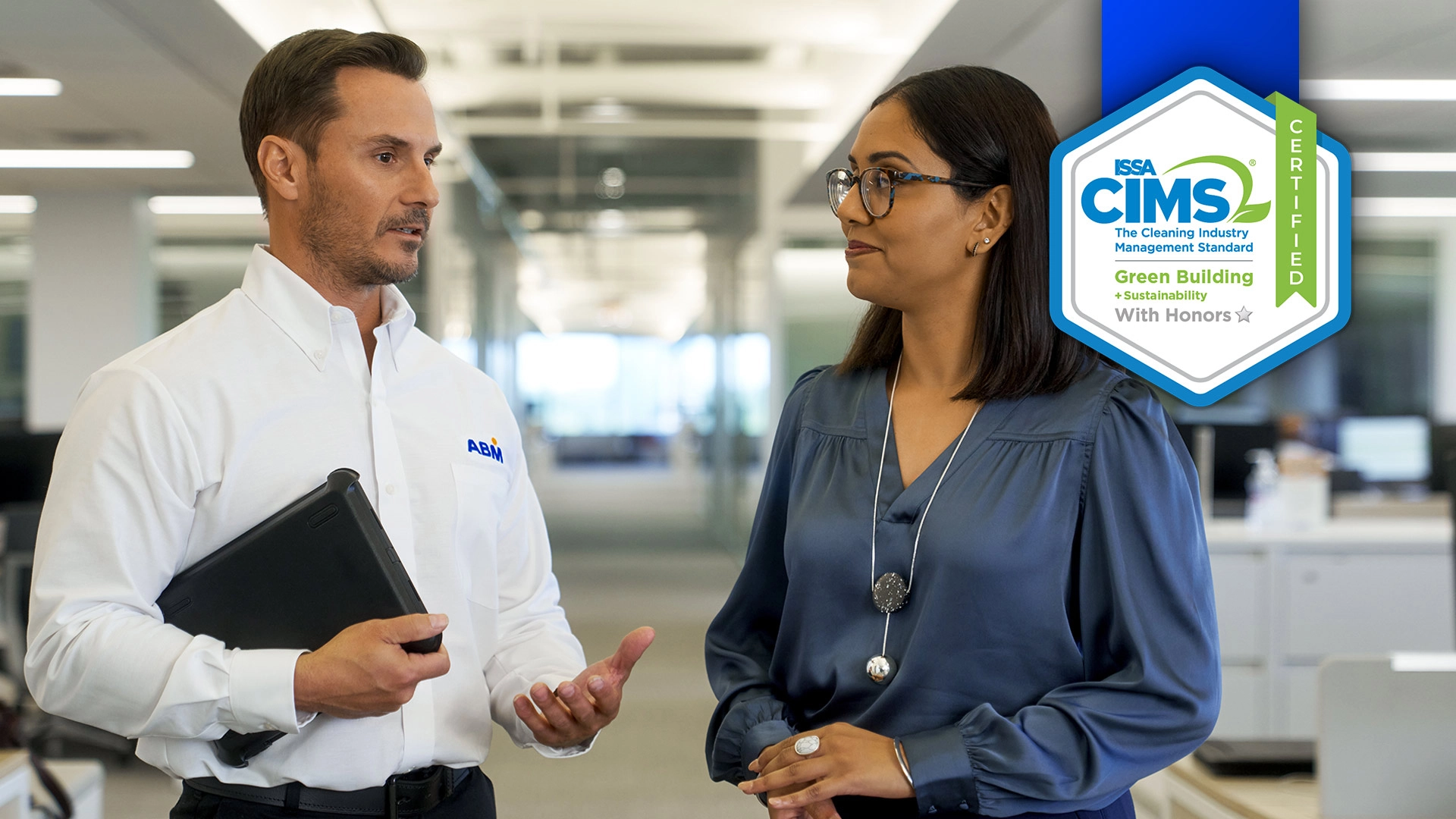
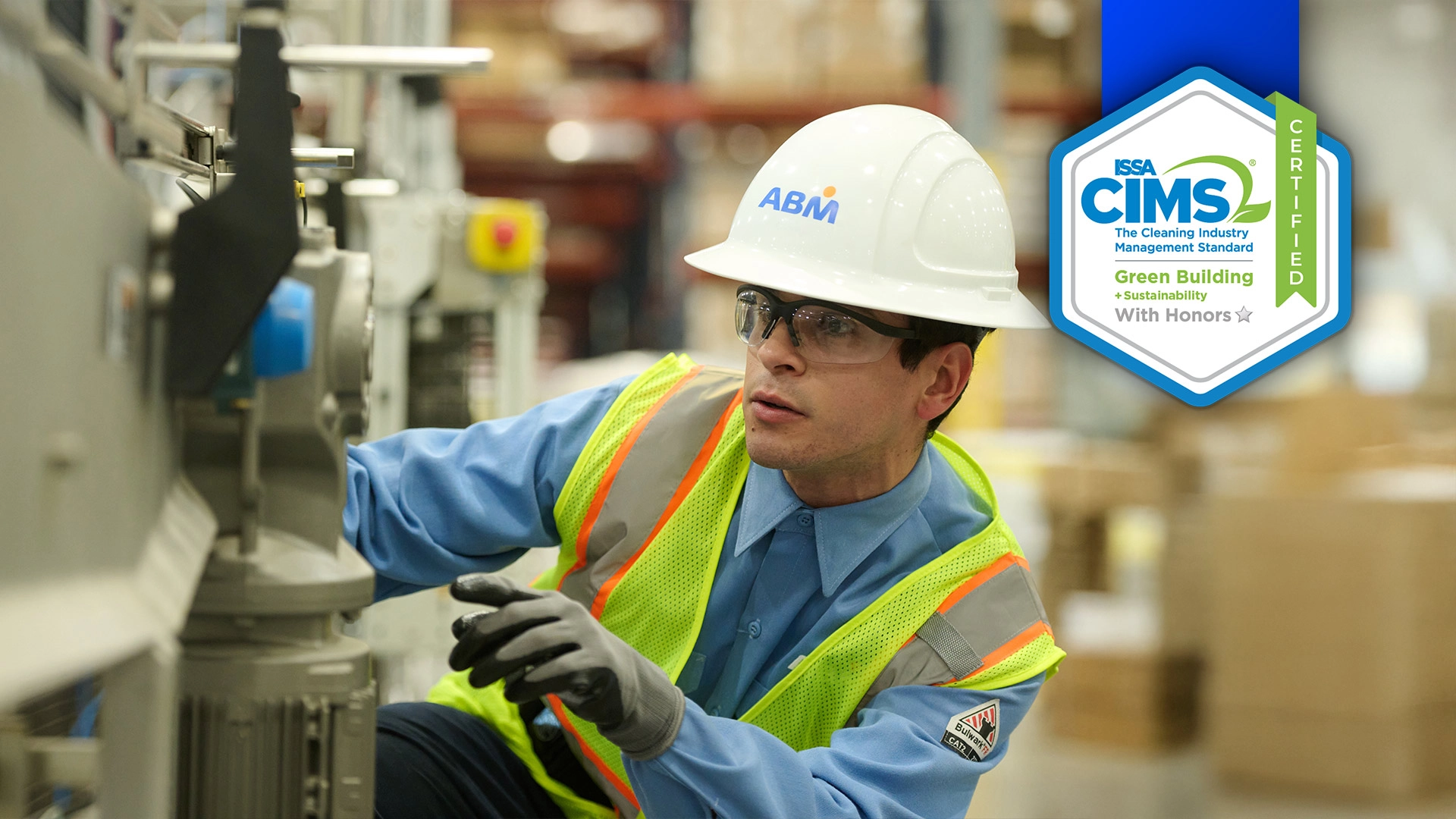
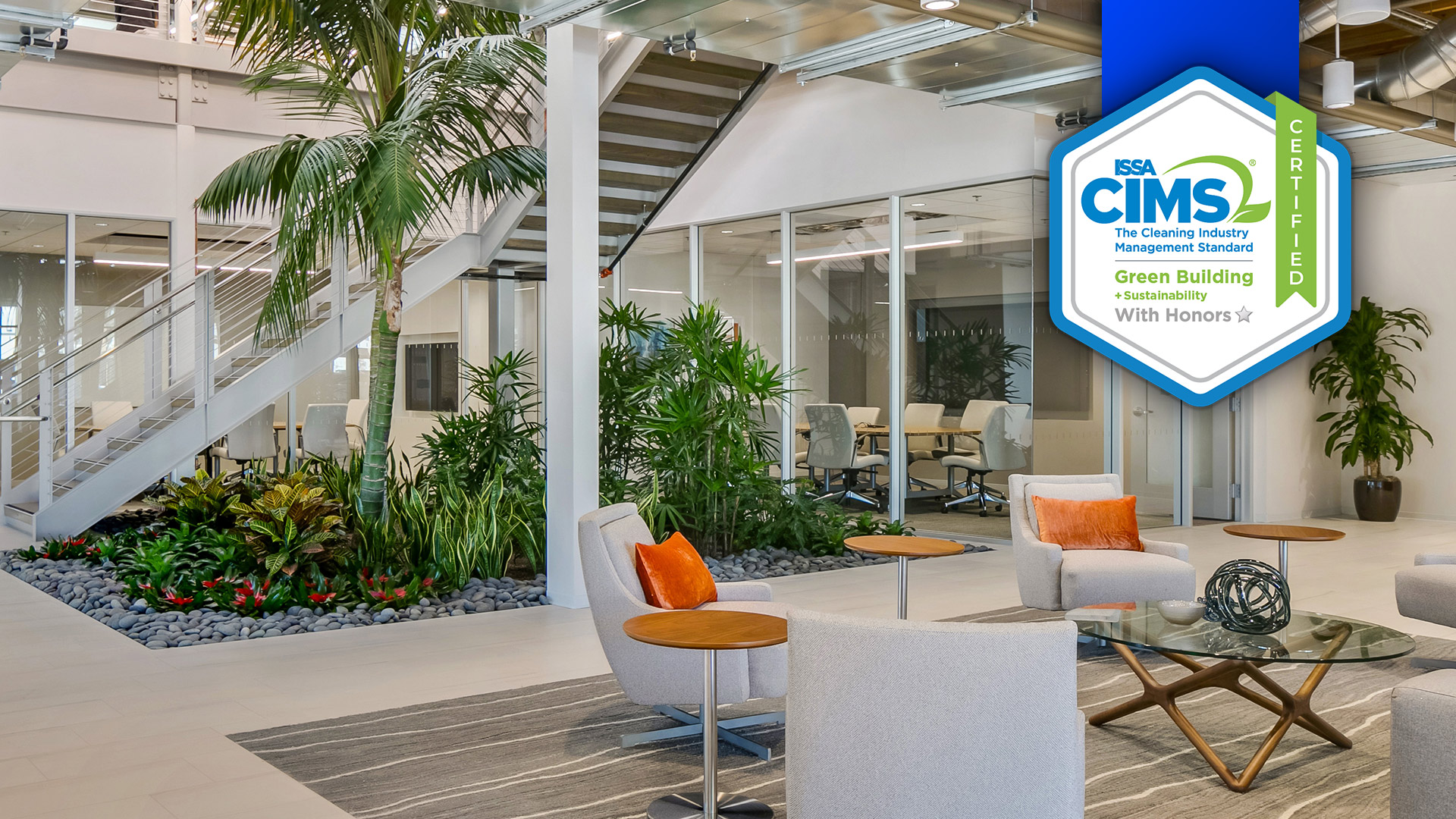
- ABM became the first organization to earn ISSA's CIMS Green Building + Sustainability Certification with Honors, the highest level available within the Cleaning Industry Management Standard program, audited and validated by a third-party association.
- We hold Green Seal™ GS-42 certification, which validates that our commercial and institutional cleaning services meet science-based criteria for reduced chemical toxicity and improved indoor environmental quality. This is not a self-assessed standard.
- We were named to Newsweek's America's Most Responsible Companies list for the fifth consecutive year, a recognition that requires sustained performance, not a single strong year.
- At JFK Terminal 4, we supported the first pre-existing air terminal to achieve LEED Platinum certification, deploying IoT-enabled systems and predictive maintenance that helped the terminal use 21% less water and 2.25% less electricity than comparable facilities.
Each of these reflects a program that was built over time, independently verified, and in most cases re-earned annually rather than awarded once.
The future of sustainability at ABM
Looking ahead, there is still more work to be done to buildsustainability into everything we do. Our priorities in the short-term include:
- Expanding our REC purchases while exploring direct renewable electricity contracts for select facilities, rather than relying solely on certificate-based procurement.
- Continuing to build out fleet electrification, procuring hybrid and electric vehicles as they become operationally feasible across our service footprint.
- Deepening Scope 3 data quality and coverage, and extending the kind of account-level, contract-specific carbon reporting we've piloted in the UK and Ireland to more of our global operations.
- Continuing to refine our climate risk assessment as the regulatory and disclosure landscape itself keeps evolving.
In this series, we’ll also demonstrate what our commitment to sustainability results means for our clients: lower energy and water bills, smarter buildings, and more engaged team members. We’ll explore the shift that’s happening in our industry: Expanded emissions categories, external assurance, third-party materiality assessments, and cross-functional governance are all things facility partners need to start now, so as clients scale, so does sustainability.
The next article will cover some of the things we learned during third-party assessments, particularly around reporting. For clients, reporting requirements have been genuinely in flux. We’re helping navigate this uncertainty by building the data infrastructure that supports reporting no matter what rules apply.